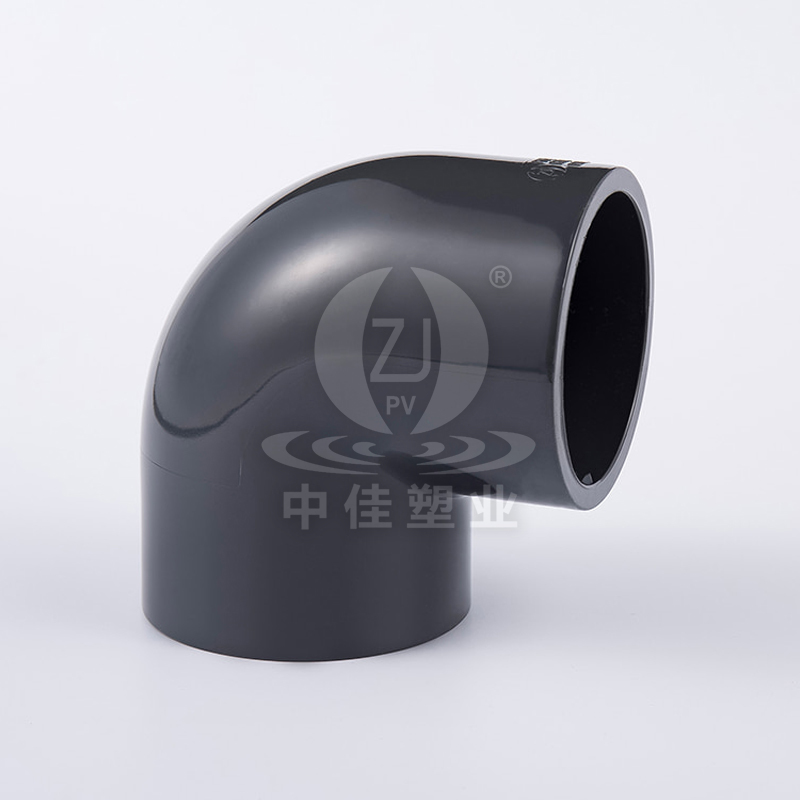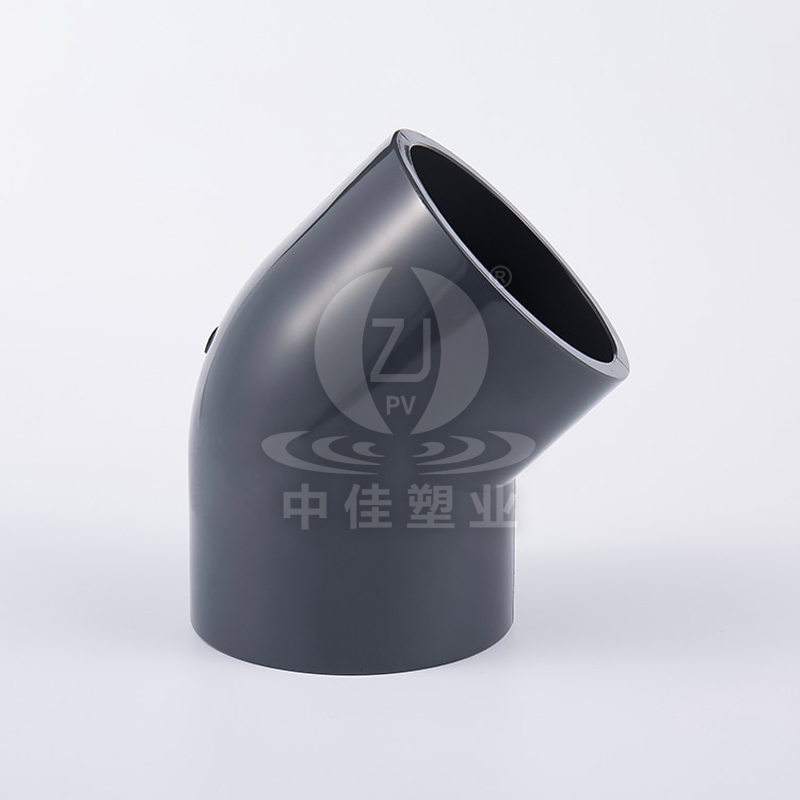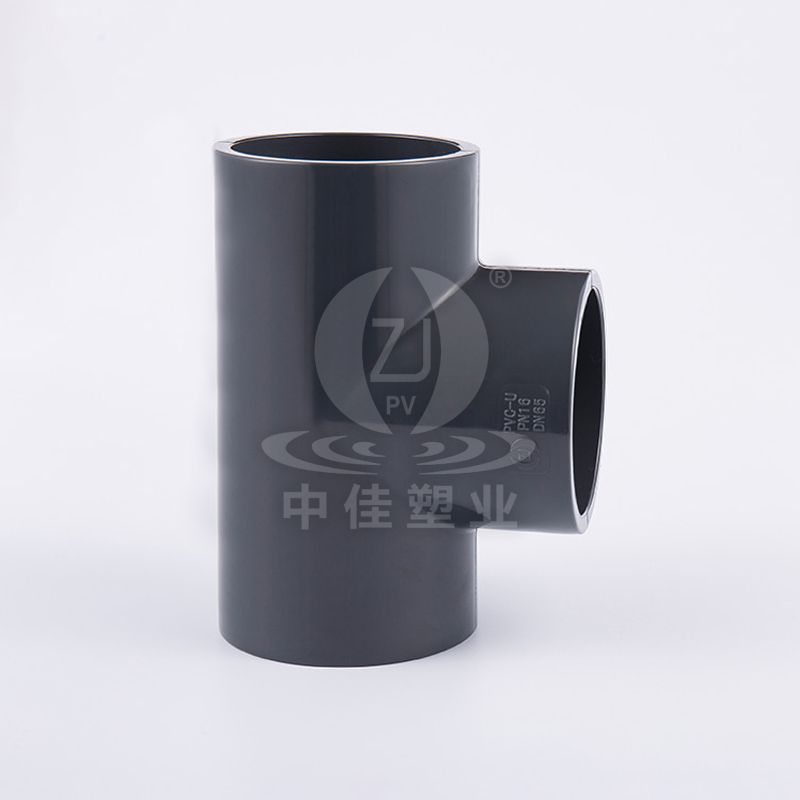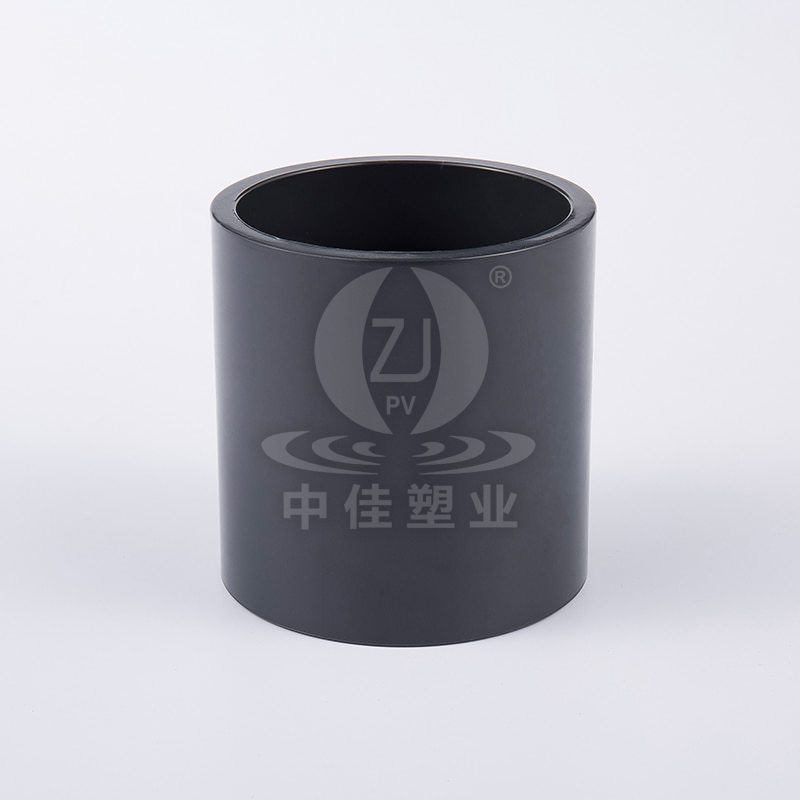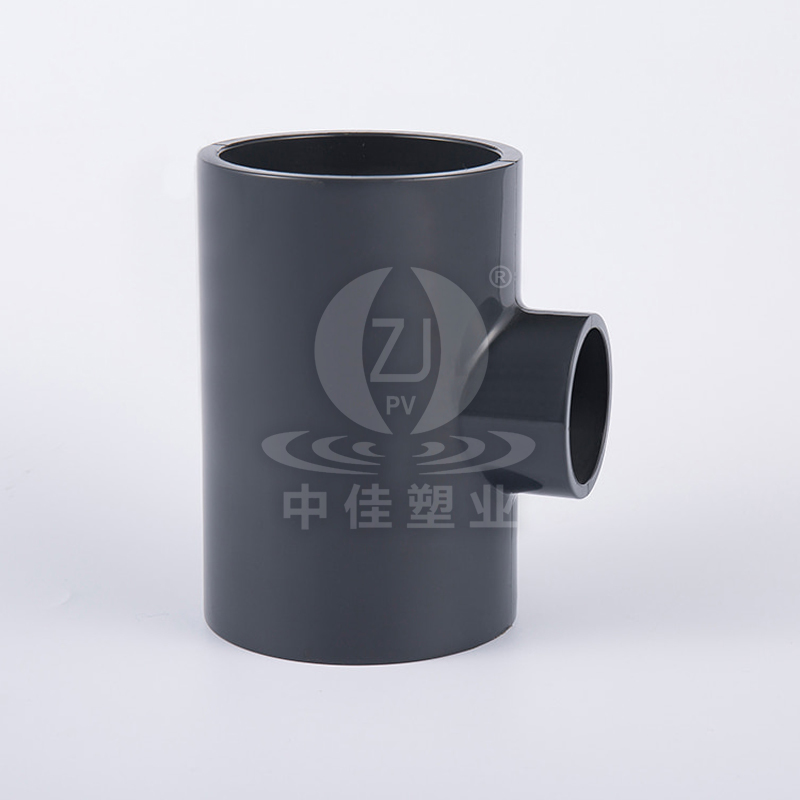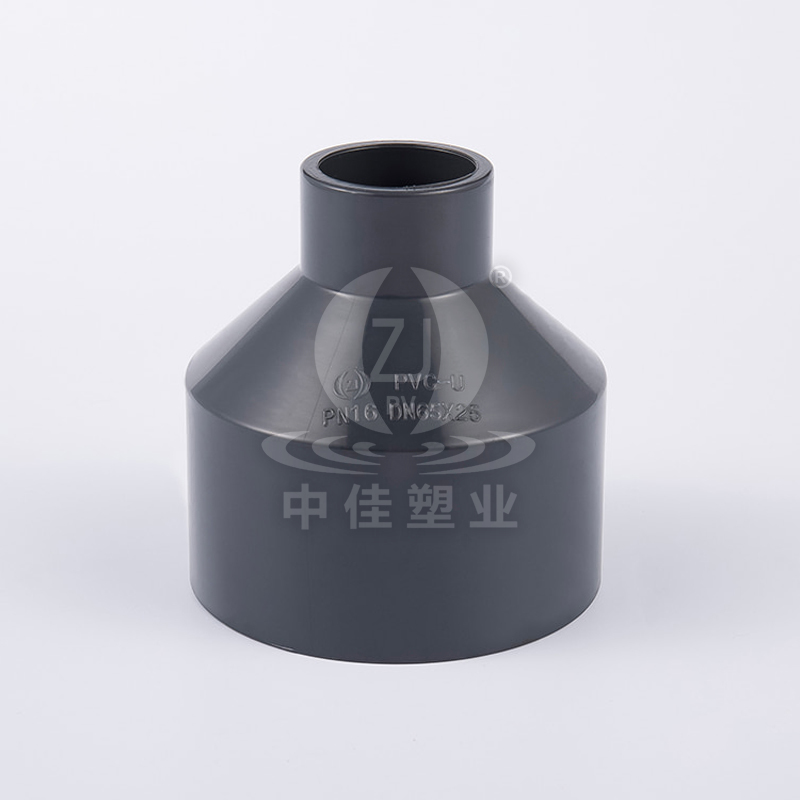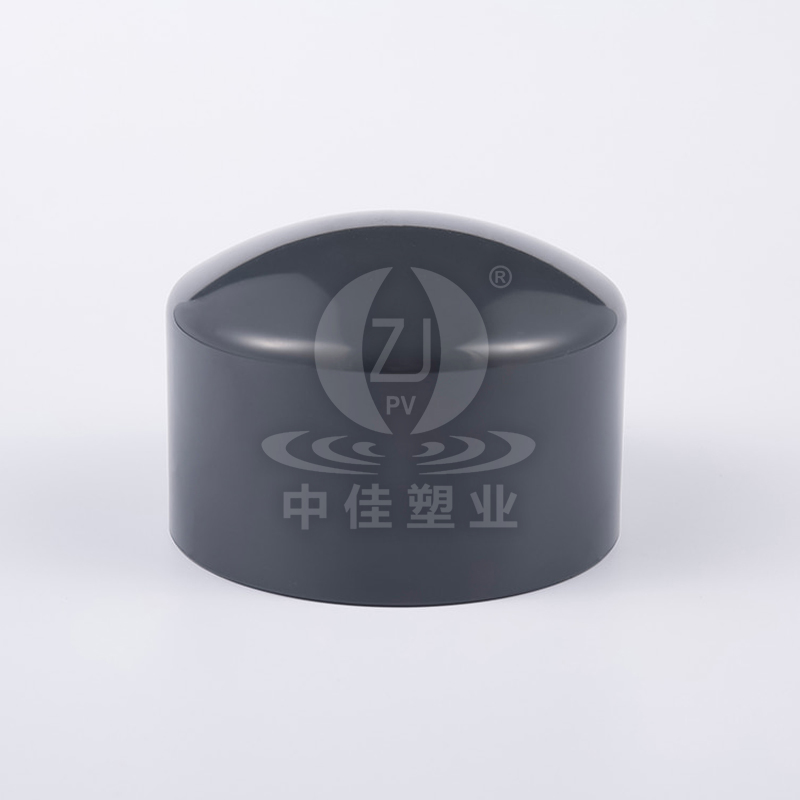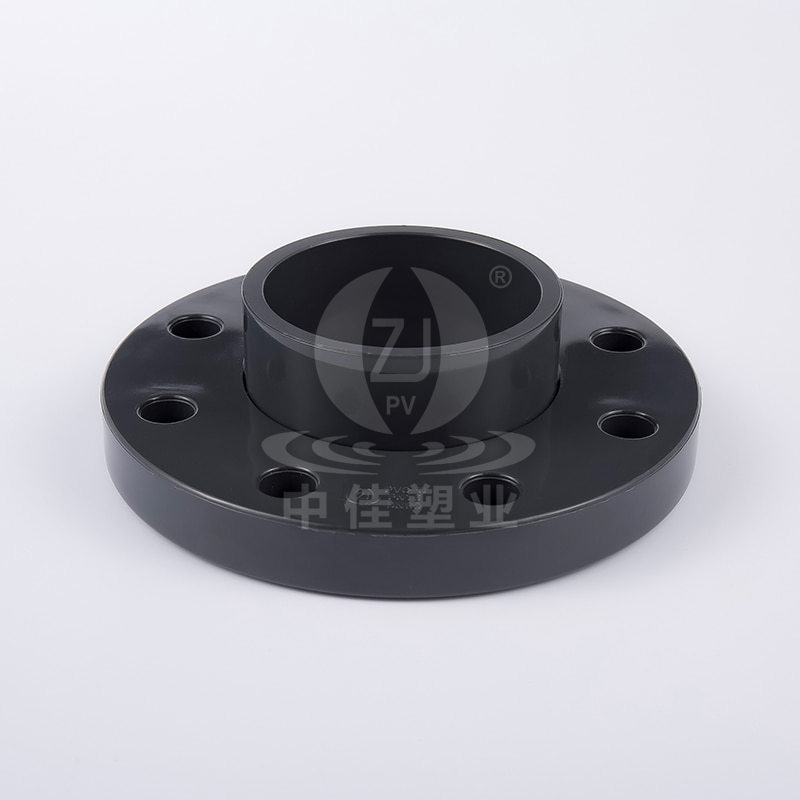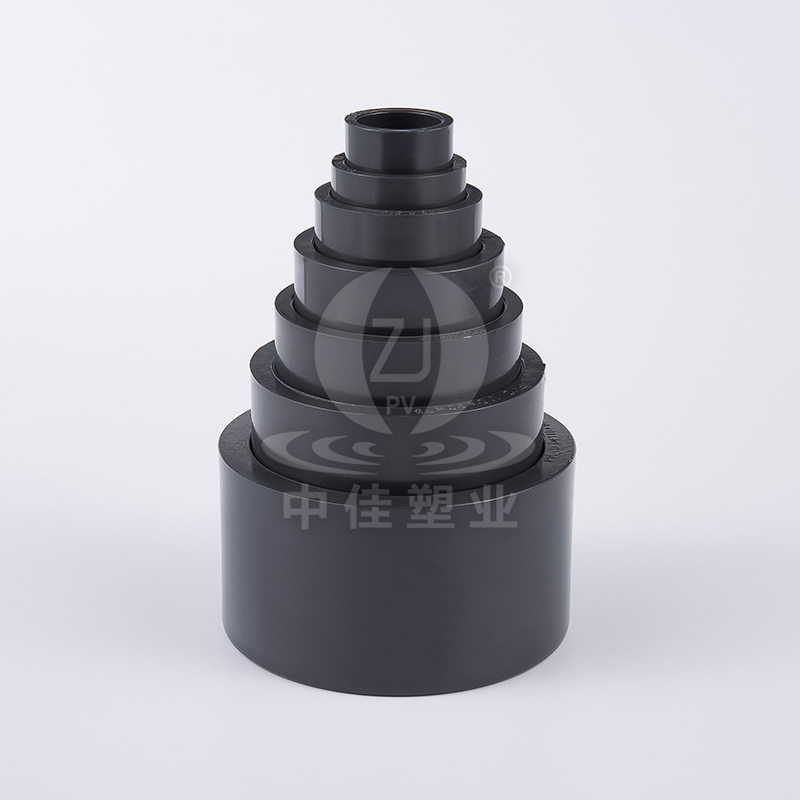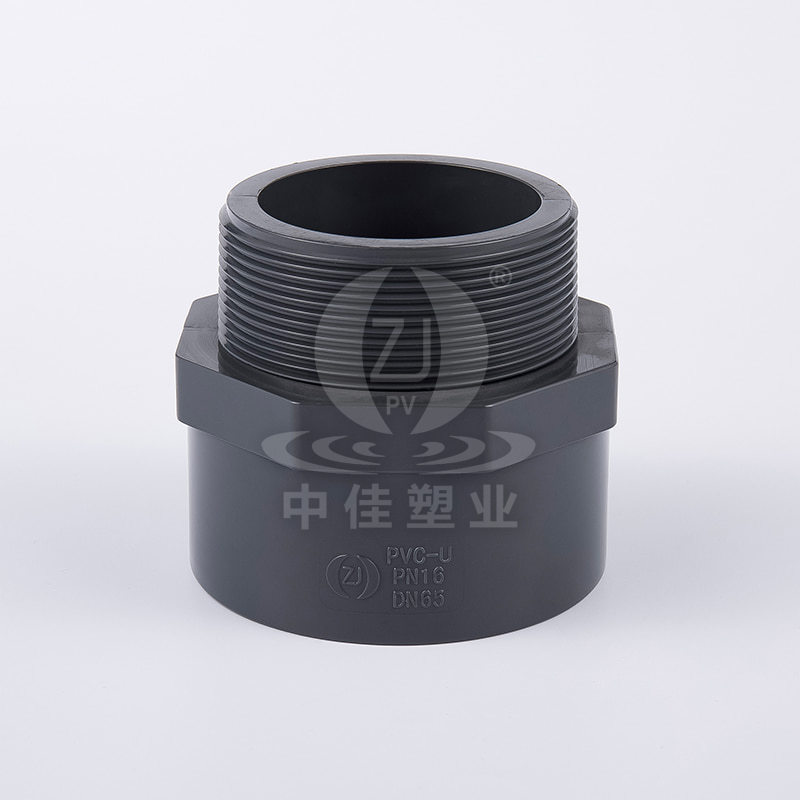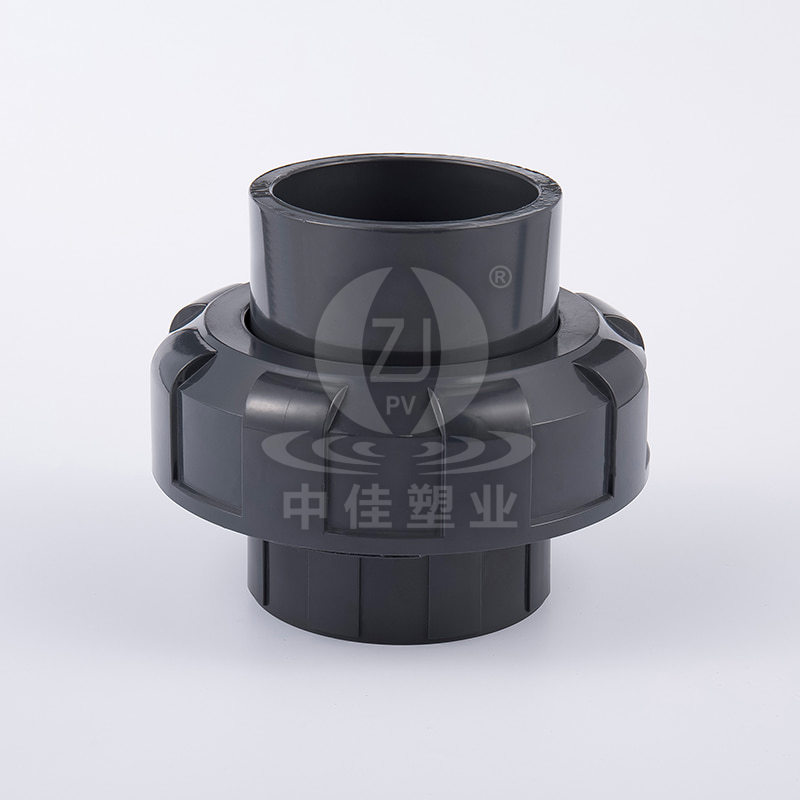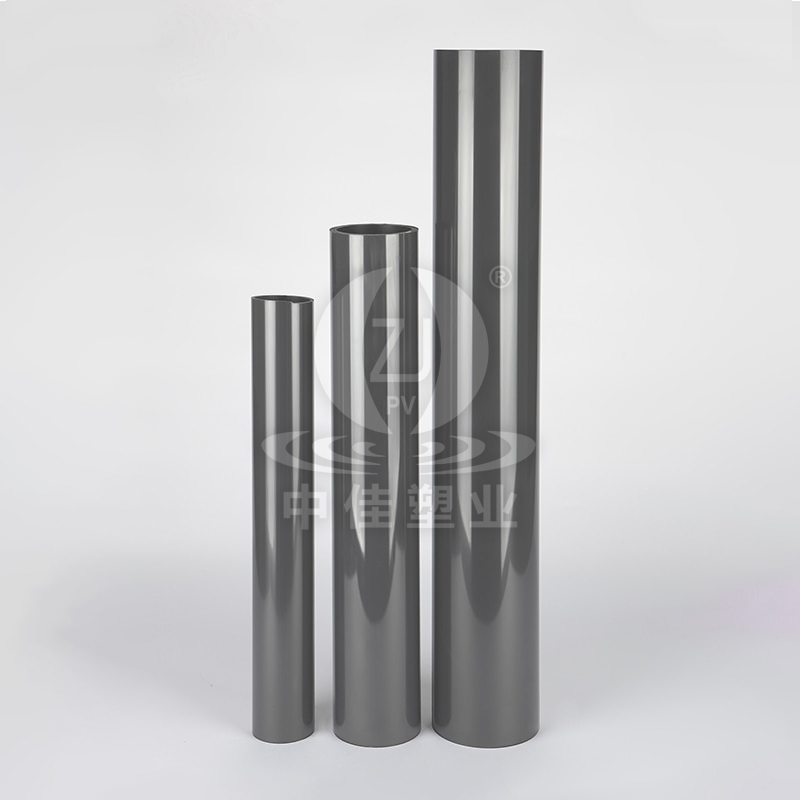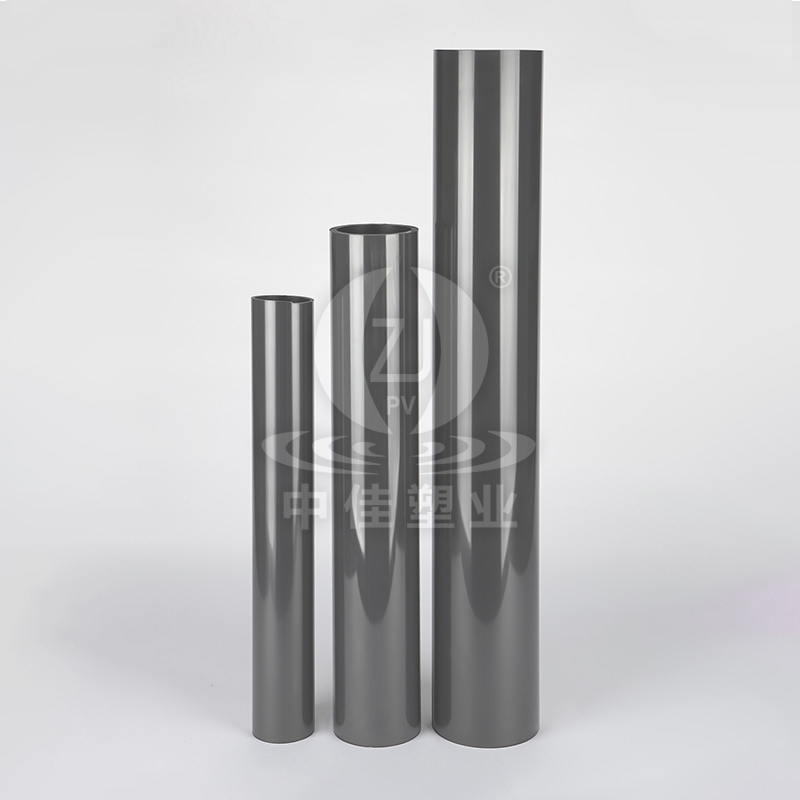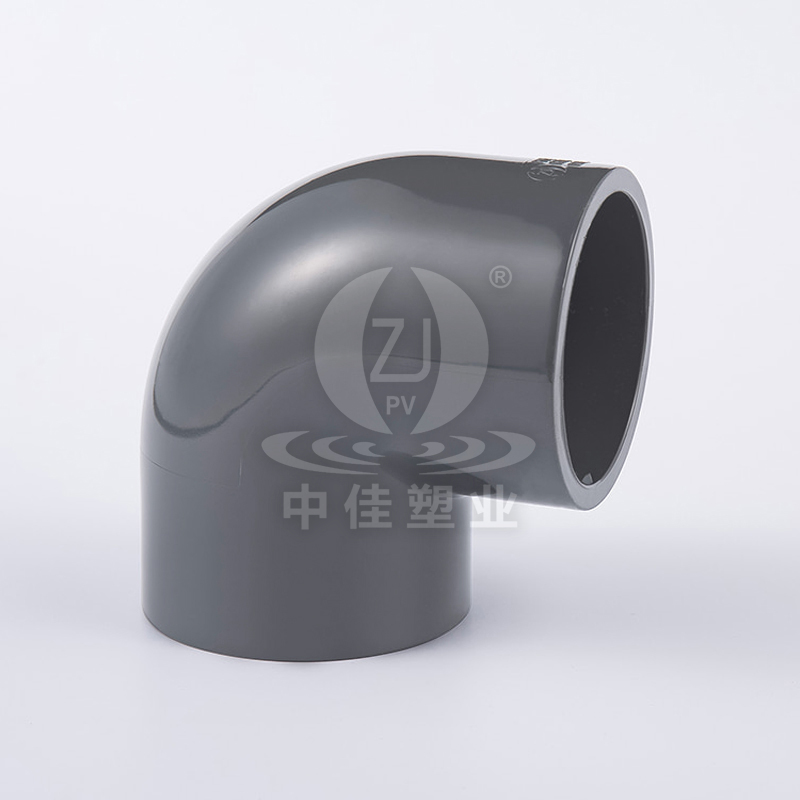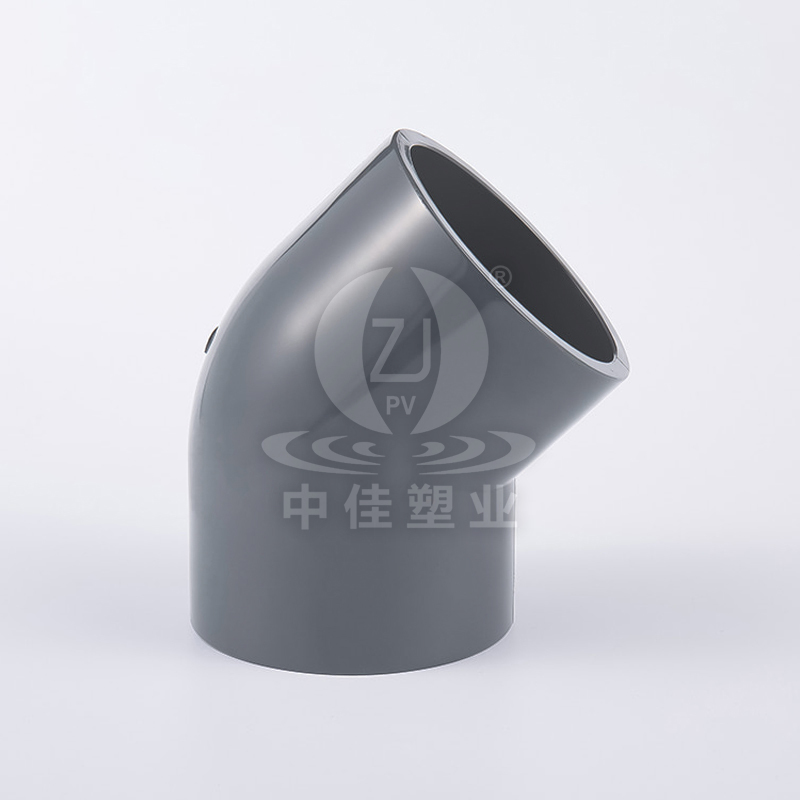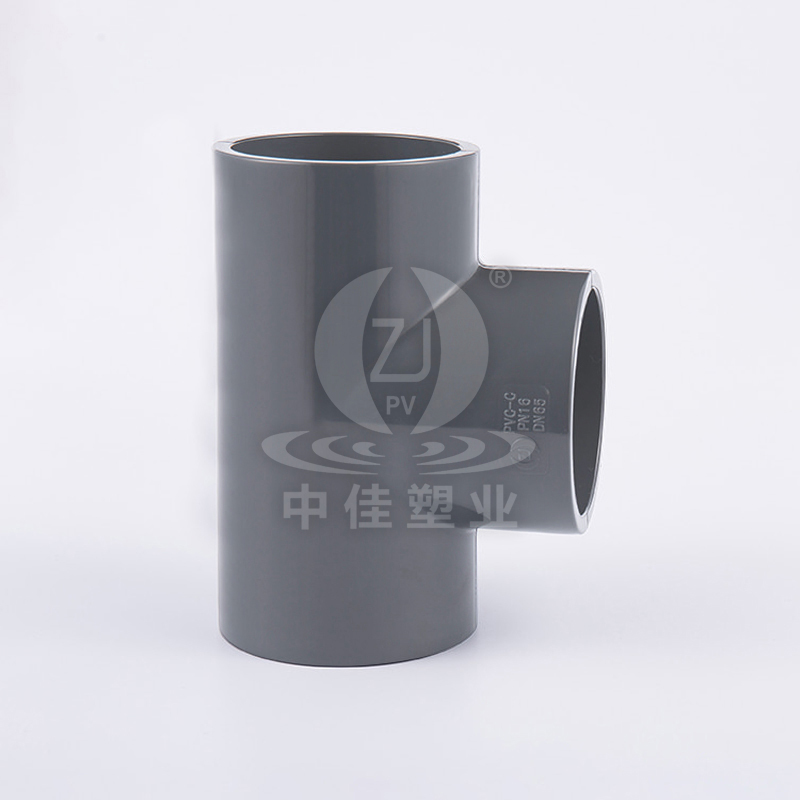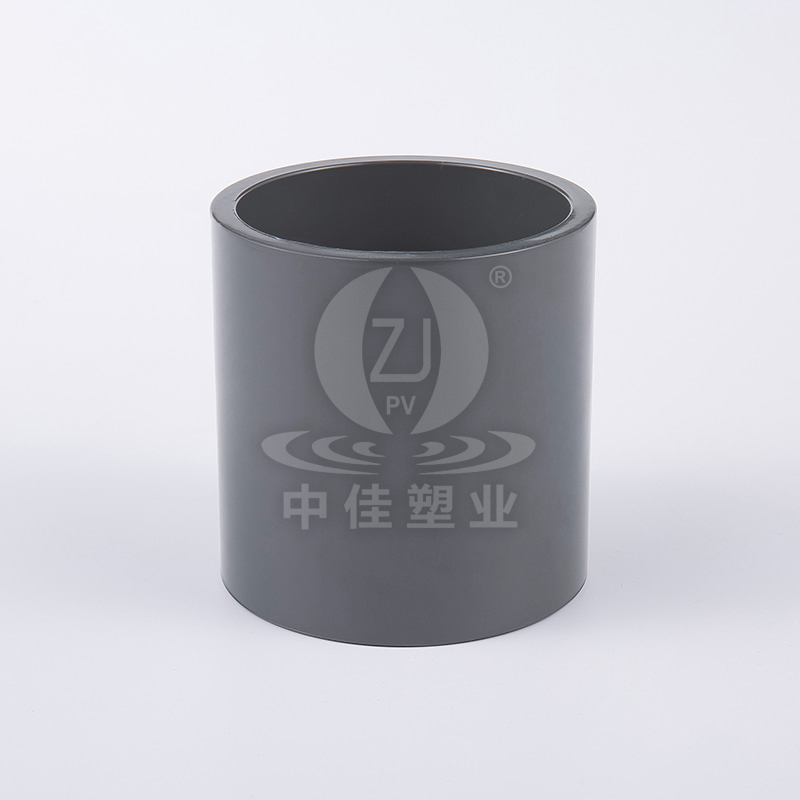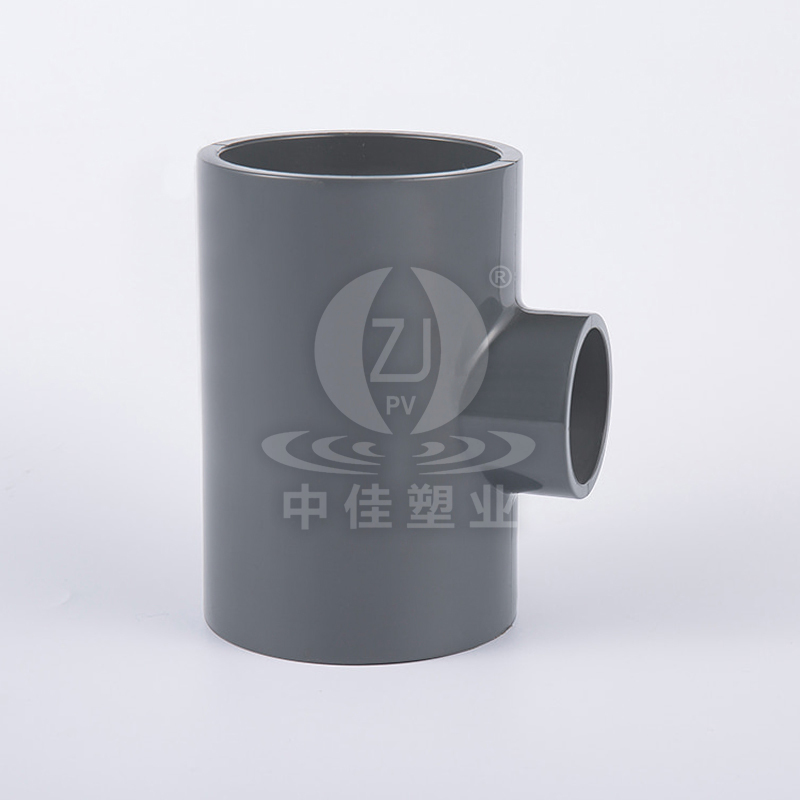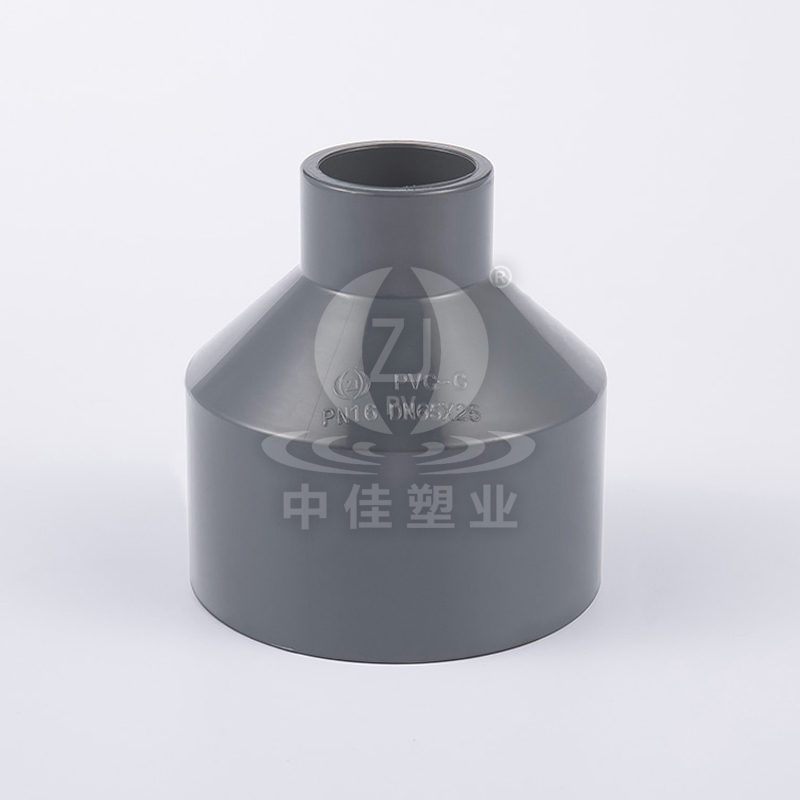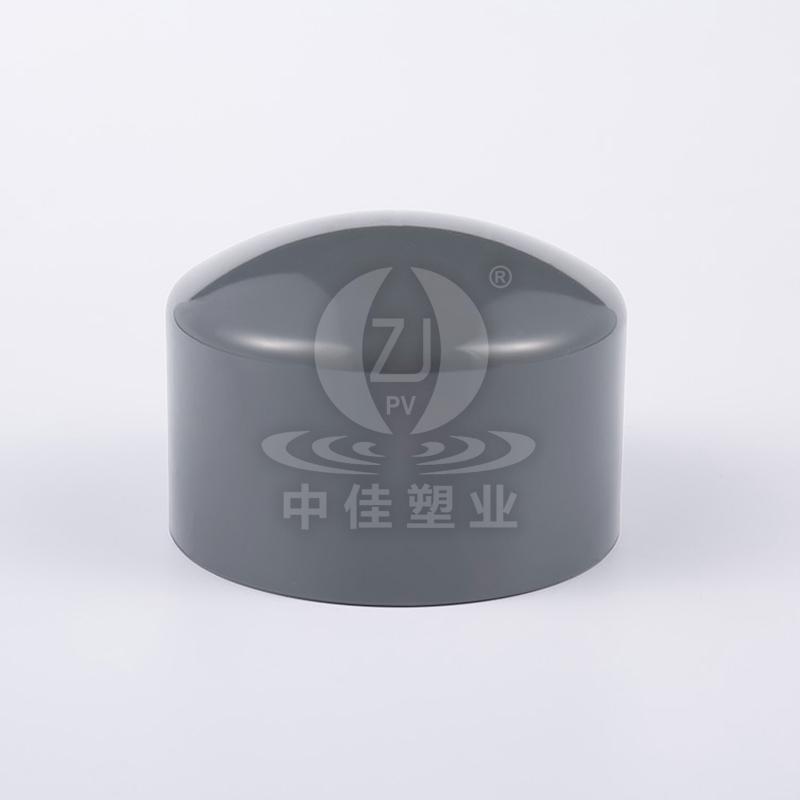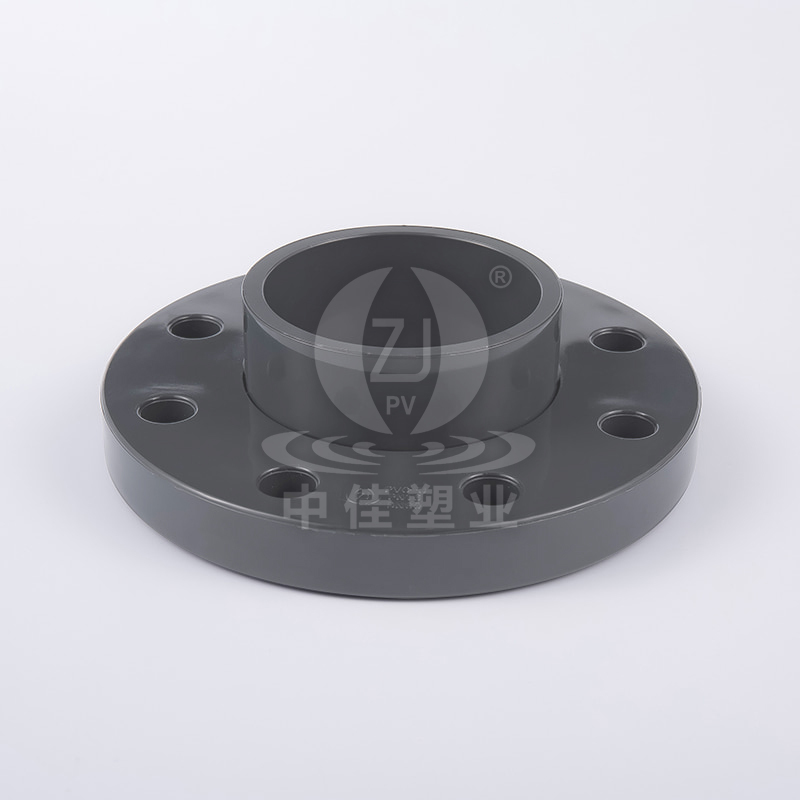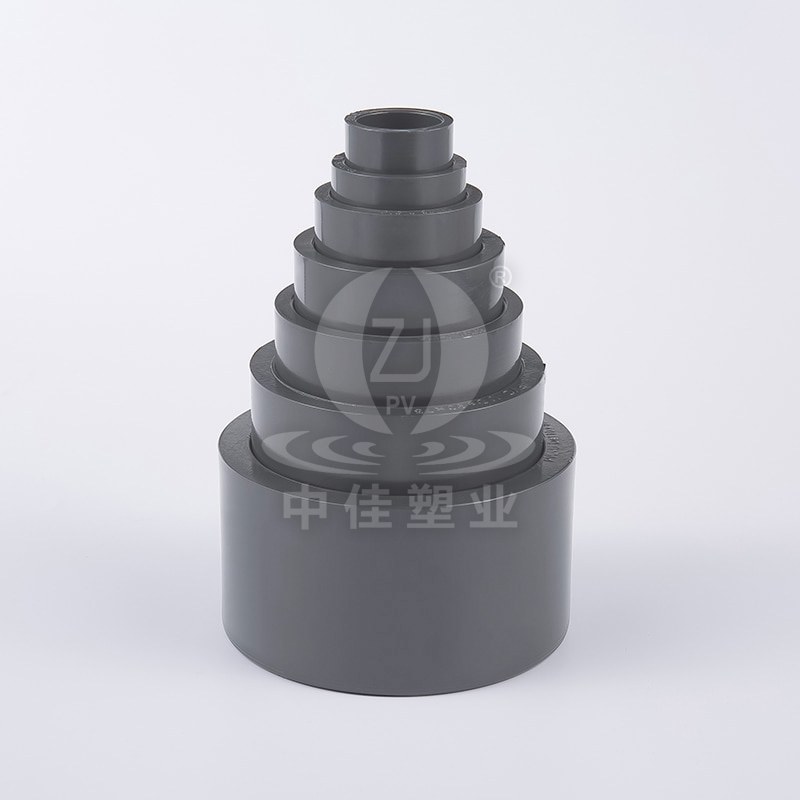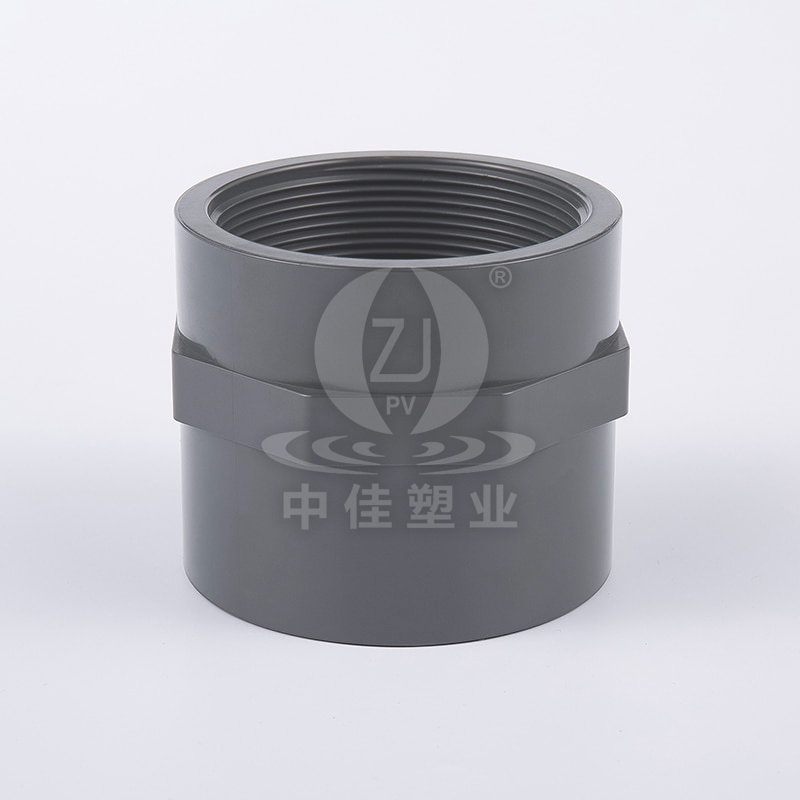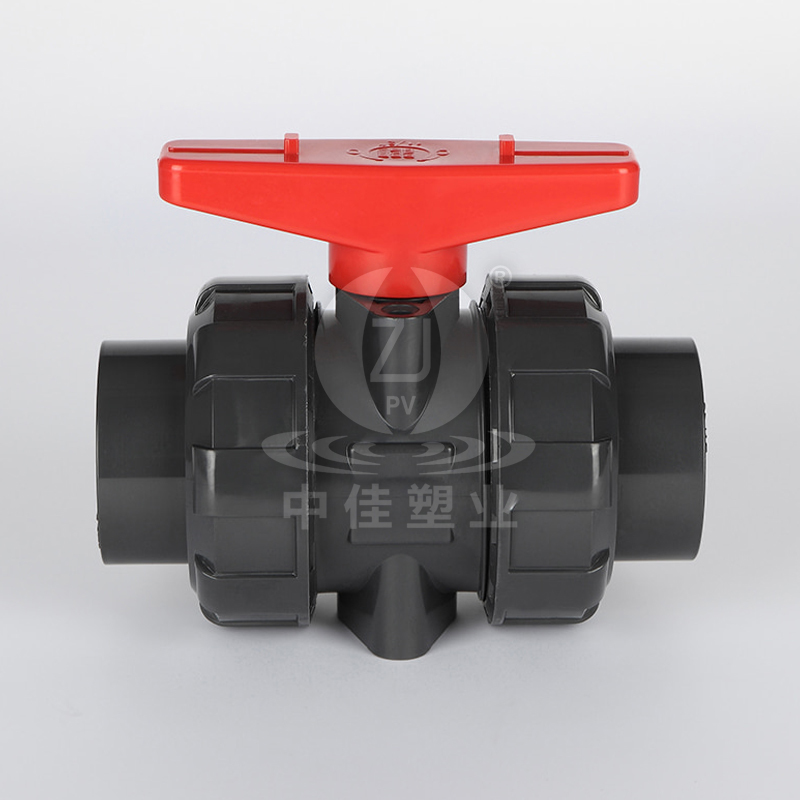




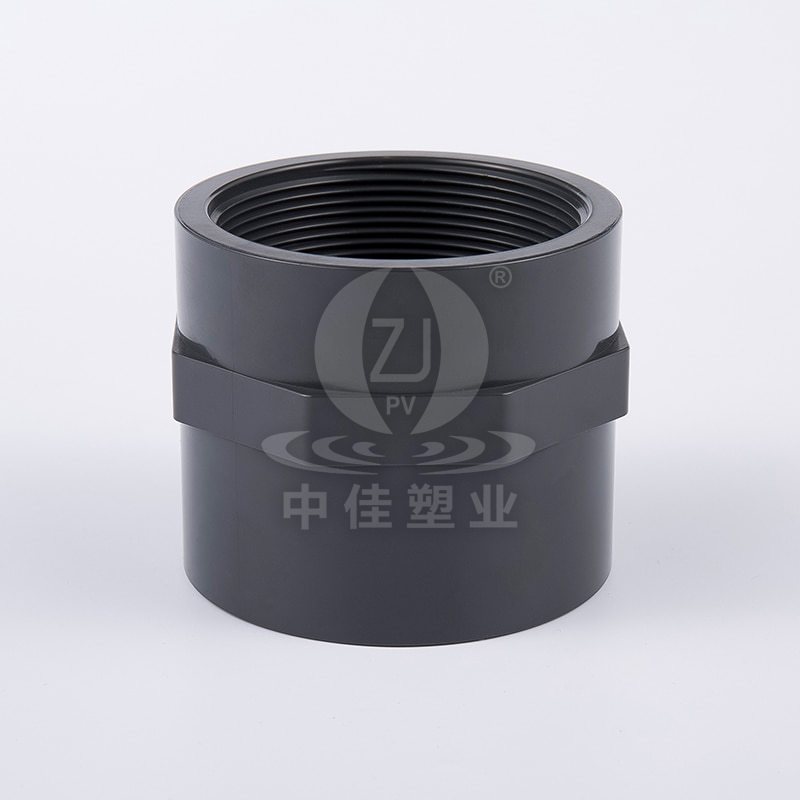
A PVC-U female adapter is a pipe fitting manufactured from unplasticized polyvinyl chloride that creates a threaded female connection on one end and a plain socket or spigot on the other. The female thread — also called an internal thread — accepts a corresponding male-threaded component such as a valve, pump port, metal nipple, or instrument fitting. The plain end is solvent-cemented or push-fitted directly onto a PVC-U pipe. This combination makes the female adapter the standard solution wherever a PVC-U piping system needs to connect to a threaded component, transition to a metal fitting, or provide a serviceable joint that can be unscrewed and reassembled without cutting pipe.
The "U" in PVC-U is critical to understanding this fitting's capabilities. Unplasticized PVC contains no plasticizer additives, which gives it higher rigidity, greater pressure resistance, and better chemical resistance than flexible PVC grades. These properties make PVC-U the default material for pressure piping in water supply, irrigation, industrial process lines, and swimming pool systems — all environments where the female adapter is a routine component in the installation.
The female adapter is an injection-molded fitting produced from PVC-U compound conforming to material standards such as ISO 1452, ASTM D1784 Cell Class 12454, or EN 1452. The fitting body is a short cylindrical piece with two distinct ends. The socket end — the end that connects to the PVC-U pipe — has a smooth internal bore sized to receive the pipe's outer diameter with a controlled interference fit. Solvent cement is applied to both the pipe outer surface and the socket bore, and when the pipe is inserted and rotated slightly, the cement softens both surfaces and fuses them into a monolithic joint as it cures.
The threaded end carries an internal (female) thread machined or molded to a standard thread form. BSP (British Standard Pipe) parallel and tapered threads are the most common globally, with NPT (National Pipe Taper) threads standard in North American markets. The thread form is molded directly into the fitting body during injection molding for cost efficiency, though some higher-pressure fittings use machined threads for tighter tolerances. A hex or octagonal external profile is often molded around the threaded end to allow a spanner or wrench to grip the fitting during assembly, preventing the solvent-cemented socket end from rotating and cracking the pipe joint while the threaded male component is tightened.
PVC-U female adapters are produced in a wide range of sizes to match the pipe sizing systems used in different markets. Nominal sizes typically run from DN15 (½ inch) through DN100 (4 inch) for standard pressure pipe applications, with larger sizes available for industrial and irrigation applications. The following table summarizes the most common sizes and their typical thread designations:
| Nominal Size | Pipe OD (mm) | BSP Thread | NPT Thread | Common Application |
| DN15 (½") | 20 | ½" BSP | ½" NPT | Domestic water, valve connections |
| DN20 (¾") | 25 | ¾" BSP | ¾" NPT | Irrigation laterals, pump outlets |
| DN25 (1") | 32 | 1" BSP | 1" NPT | Pool filtration, industrial process |
| DN32 (1¼") | 40 | 1¼" BSP | 1¼" NPT | Pump connections, chemical dosing |
| DN40 (1½") | 50 | 1½" BSP | 1½" NPT | Water treatment, irrigation mains |
| DN50 (2") | 63 | 2" BSP | 2" NPT | Pool systems, industrial supply lines |
It is important to note that BSP and NPT threads are not interchangeable despite having similar nominal size designations. BSP parallel (BSPP) threads have a constant diameter and require a face seal or bonded seal washer to achieve a pressure-tight joint. BSP tapered (BSPT) threads tighten by thread interference and typically use PTFE tape. NPT threads are tapered and seal primarily by thread interference, also requiring PTFE tape or thread sealant. Specifying the wrong thread type when ordering fittings results in joints that leak or cannot be assembled at all.
PVC-U female adapters carry pressure ratings that decrease as temperature increases — a fundamental characteristic of thermoplastic materials that must be understood to avoid failures in service. At 20°C, a standard PN16-rated PVC-U female adapter is designed for a maximum working pressure of 16 bar. As temperature rises, the material softens and its pressure capacity drops. At 40°C, the same fitting's working pressure is reduced to approximately 10 bar; at 60°C, it falls to around 4–5 bar; and above 60°C, PVC-U is generally not recommended for pressure service at all.
This temperature-pressure relationship has direct consequences for system design. PVC-U female adapters are appropriate for cold water supply, irrigation, swimming pool systems, and ambient-temperature chemical lines — all environments where fluid temperature remains below 40°C under normal operating conditions. They are not suitable for hot water supply, steam lines, or any process where fluid temperature regularly exceeds 50°C. For elevated-temperature applications, CPVC (chlorinated PVC) fittings or PP-R (polypropylene random copolymer) fittings are the appropriate material choices.
One of the primary reasons PVC-U female adapters are specified in industrial and chemical processing applications is the material's broad resistance to a wide range of chemicals at ambient temperature. PVC-U resists most acids, alkalis, salts, and aqueous solutions that would corrode metal fittings rapidly. This makes PVC-U female adapters the standard choice for connecting chemical dosing pumps, sensors, and valves in water treatment plants, swimming pool chemical systems, and electroplating rinse lines.
However, PVC-U is not universally resistant. It is attacked by ketones such as acetone, esters, aromatic hydrocarbons including benzene and toluene, and chlorinated solvents. Concentrated oxidizing acids, including concentrated sulfuric acid and nitric acid above certain concentrations, can also degrade PVC-U over time. Before specifying a PVC-U female adapter in any chemical service, verify the specific chemical compatibility against the manufacturer's chemical resistance chart, paying attention to both the concentration and temperature of the fluid, as resistance can drop sharply when both variables increase simultaneously.
Correct installation of a PVC-U female adapter requires attention to both the solvent cement joint on the pipe end and the threaded connection on the fitting end. Errors in either joint are a common cause of leaks and premature fitting failure.
Cut the pipe square using a pipe cutter or fine-toothed saw. A diagonal cut reduces the effective bonding area and weakens the joint. Deburr the pipe end and chamfer the outer edge lightly with a file or chamfering tool — this prevents the pipe from scraping solvent cement off the socket wall during insertion. Clean both the pipe outer surface and the fitting socket bore with PVC cleaner or primer, which removes surface contamination and softens the PVC slightly to improve cement penetration. Apply solvent cement to both surfaces with a brush sized for the pipe diameter, insert the pipe into the socket with a slight twisting motion to distribute the cement, and hold the joint firmly for 30 seconds to prevent the pipe from pushing back out as the cement softens the surfaces. Allow the joint to cure for the time specified by the cement manufacturer before pressurizing — typically a minimum of one hour at 20°C for lines up to DN50.
On the female threaded end, apply two to three wraps of PTFE tape clockwise onto the male thread of the component being installed, starting from the first thread and working toward the component body. For BSPP parallel thread connections, use a bonded seal washer or an O-ring face seal rather than PTFE tape, as tape alone will not provide a pressure-tight seal on parallel threads. Tighten the male component into the female adapter by hand first to confirm thread engagement is straight and not cross-threaded, then tighten with a spanner — typically one to two full turns past hand-tight for tapered threads, or to the washer's compression specification for parallel threads. Do not overtighten. PVC-U female adapters can crack at the thread root if excessive torque is applied, particularly when connecting heavy metal components that act as lever arms. Use a second spanner on the adapter's hex body to counter-hold the fitting while tightening, protecting the solvent-cemented pipe joint from rotational stress.
Several installation and specification errors appear repeatedly in failed PVC-U female adapter joints across different industries and applications. Being aware of these in advance prevents the most common causes of leaks, cracking, and premature replacement.
Choosing the correct PVC-U female adapter requires matching four variables simultaneously: pipe size and standard, thread type and size, pressure rating, and material compatibility with the fluid being conveyed. For most cold water, irrigation, and pool applications, a standard PN16 PVC-U female adapter in the correct nominal size with the appropriate BSP or NPT thread is the straightforward answer. For chemical process applications, confirm chemical compatibility before ordering rather than assuming PVC-U will be suitable based on general chemical resistance reputation alone.
When sourcing from suppliers, request fittings that carry certification marks confirming compliance with the applicable standard — ISO 1452, EN 1452, ASTM D2466, or AS/NZS 1477 depending on your market. Certified fittings have been tested for dimensional accuracy, pressure performance, and material quality. Uncertified fittings at lower prices may have inconsistent wall thickness, substandard PVC-U compound, or thread tolerances that produce unreliable joints. For installed systems that will be buried, embedded in structures, or otherwise difficult to access after commissioning, the cost difference between certified and uncertified fittings is negligible compared to the cost of excavation and repair if a substandard fitting fails in service.

Suivez-nous
PVC-U
Tuyaux PVC-U PVC-U Raccords pour l'industrie PVC-U Raccords pour l'alimentation en eau PVC-U PIPES ASTM D1785 PVC-U RACPORTS ASTM SCH80
Copyright © Changzhou Zhongjia Plastic Industry Co., Ltd.Tous droits réservés.
 Fabricants de tuyaux UPVC / CPVC


Copyright @ Changzhou Zhongjia Plastic Industry Co., Ltd.Tous droits réservés.